← Work

Outcome

Drivers get through a locker visit with 3 to 4 fewer screens, and customers skip steps the parcel label already answers. At launch we compare times and errors with markets still on provider screens.

3 to 4

fewer screens per driver visit

15

test sessions with drivers and customers in 2 markets

~4

provider systems per market, replaced by one

Source: 15 sessions, August to October 2026. Germany: 3 drivers, 2 customers. Hungary: 5 drivers, 5 customers.

Problem

Each GLS market runs lockers from about four providers, each with its own screens, flows, and SaaS fee. Drivers relearn the locker at every brand, and how they deliver differs by market, by delivery partner, and even within one market.

GLS chose its own hardware components and builds the locker software in-house, to cut provider fees and give every market one experience.

How it works

Collect first, then deliver

The driver screen walks through the visit in a fixed order: take out expired and returned parcels first, which frees compartments, then deliver. Progress reads 'Collect 4 of 6'.

Drivers wanted to choose the order, but their reasons changed even within one session. We agreed to launch the fixed order and compare times and errors with markets on the old screens.
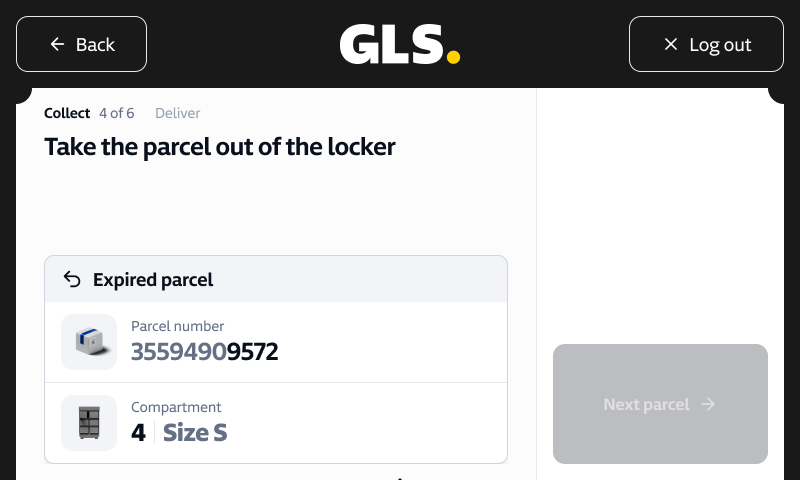
Driver screen: take the parcel out of the locker, collect 4 of 6, compartment 4 size S.

Only sizes that fit

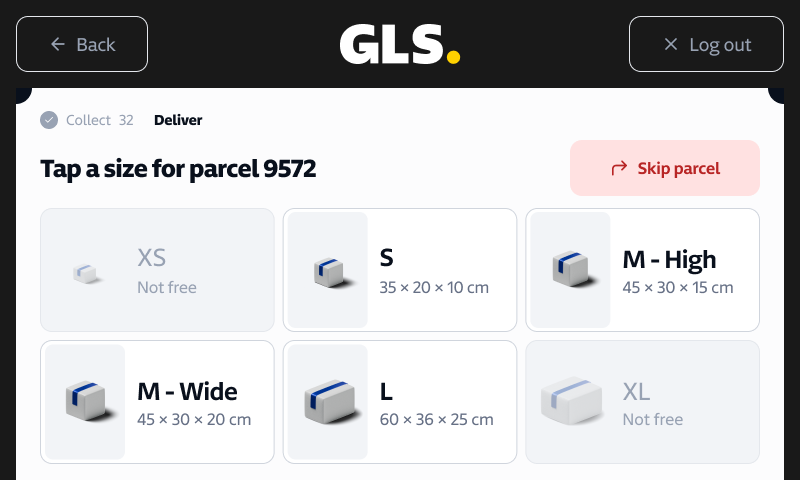
When a parcel goes in, the driver taps a size and sees which ones are free right now. Full sizes are greyed out, so nobody opens a door for nothing.

Size picker for parcel 9572 with XS and XL not free and S, M high, M wide, and L available.

Errors that say what happens next

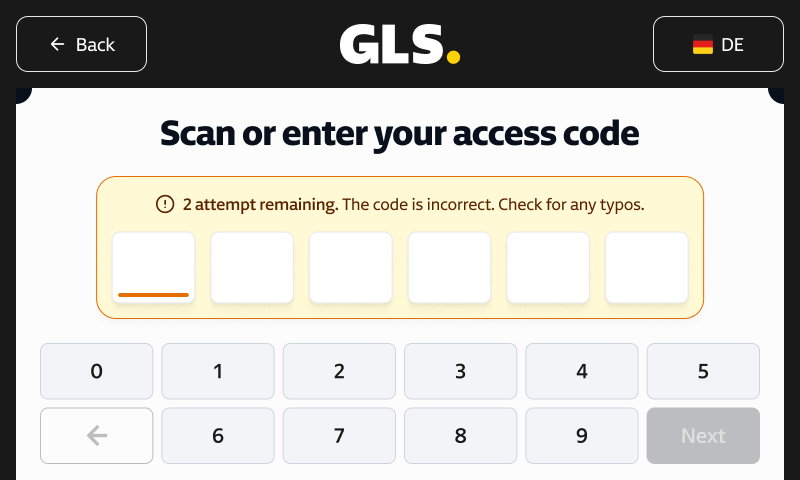
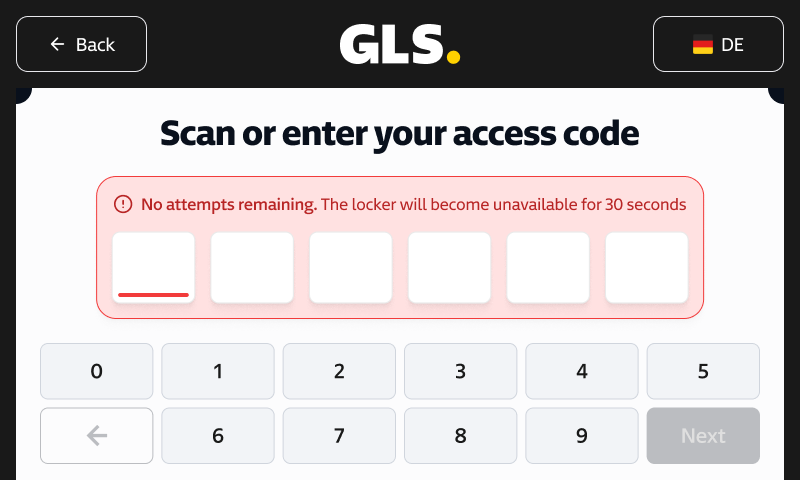
A wrong code tells people how many tries are left and what happens after the last one, so nobody gets locked out by surprise.

Testing showed people wanted to know this before it happened. Lockers are still new to many customers in Germany, so every error doubles as a short lesson.

Warning: 2 attempts remaining, the code is incorrect.
Error: no attempts remaining, the locker becomes unavailable for 30 seconds.
The second warning names the 30-second pause before it starts.

Fewer steps for customers

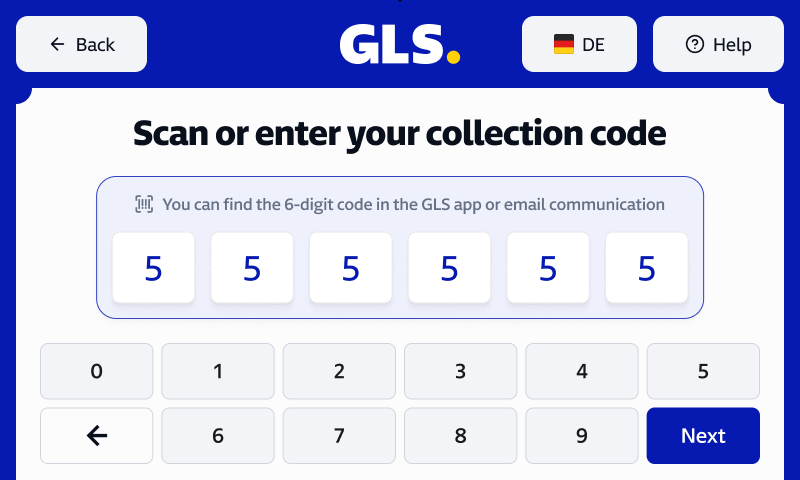
For customers, mistakes matter more than speed. I removed steps we can answer from our own data, such as typing an email for updates, which now goes to the address the parcel was booked with.

Customer screen: scan or enter your 6-digit collection code.

Part of the GLS app family

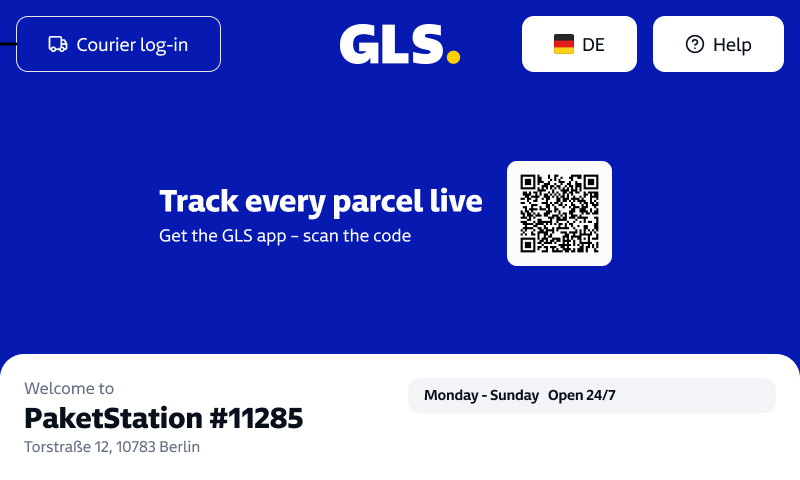
Components are variations of the GLS app and web patterns, so customers recognise them. The idle screen reuses the app's spotlight ad space, which markets can sell.

Every locker event shows up in the locker portal, so I align both roadmaps and push for portal features the locker can't launch without.

Idle screen with an app promotion, the locker name, address, and opening hours.

Decisions

Designed for Hungarian and Russian

Screens are designed in English with length budgets, line breaks, and button widths for languages that run longer. Hungarian broke the first test version; the reworked screens hold it.

Bottom-up buy-in

Markets had to commit to new operational processes. I tested with drivers in each market first, so the change came from the people doing the work, not from a central decision.

What I learned

I used AI to explore many flow directions and screen layouts quickly, then brought two or three to drivers, markets, and engineers. Seeing real options side by side made it easier to agree on one direction.